Osprey Kestrel LT 65 vs Osprey Kestrel 48
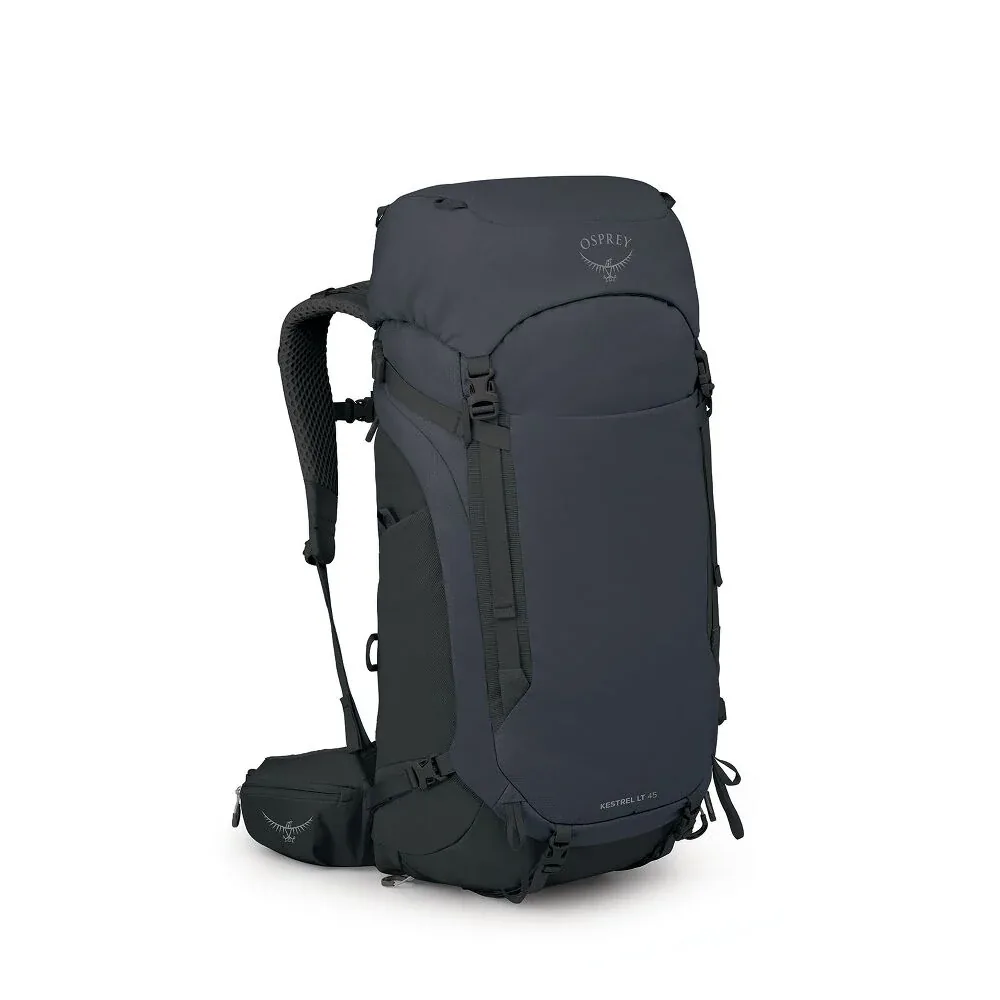
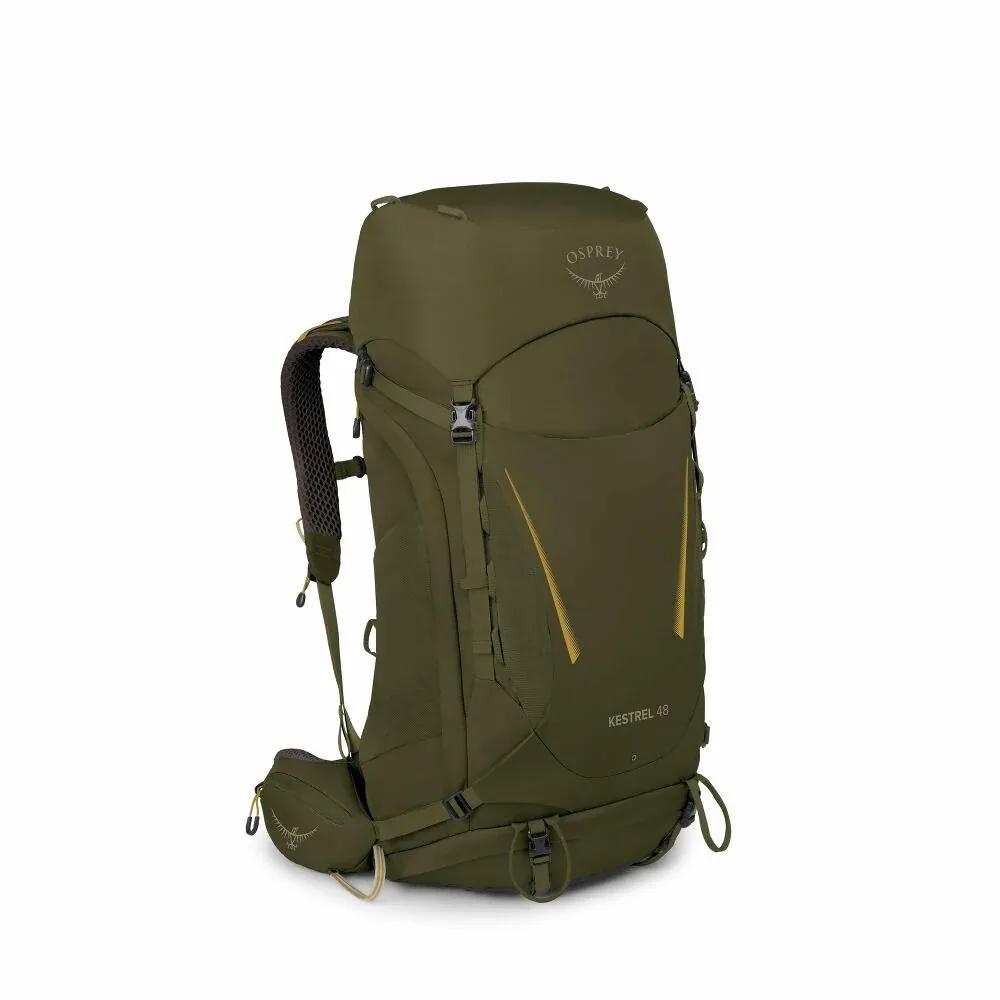
Quick take: The Osprey Kestrel LT 65 costs $20 less; the Osprey Kestrel LT 65 carries more (65 vs 48 liters); the Osprey Kestrel LT 65 is lighter (4.25 vs 4.6 lbs).
Which one to buy
The cheaper pack is the bigger and lighter one here: the Kestrel LT 65 holds 17 L more, weighs 4.25 lbs against 4.6 lbs, and costs $20 less than the Kestrel 48. It also comes with a 40 lb load rating, which Osprey does not give the standard Kestrel. That is a usable number for a pack at this price, enough for a week of food plus shoulder-season gear.
The Kestrel 48 earns its price in fabric and features. Its 420D recycled nylon body and 500D base are much heavier-wearing than the LT's 210D body over a 600D base, it has hipbelt pockets that the LT lacks, and it adds a zippered sleeping-bag compartment and dual ice tool loops. The LT is a simplification with fewer organizational features, and it is new for 2026, so there is no durability record yet.
Fit works differently. The LT uses a sliding yoke with five inches of torso adjustment, so measure your torso and set the yoke before loading up. The Kestrel 48 covers 16-20 in (S/M) and 19-23 in (L/XL) torsos. Both include a raincover in a base pocket and both use AirScape foam that sweats more than suspended mesh but less than flat foam. For multi-day trips the LT is the better buy, and the Kestrel 48 earns its extra $20 only for weekenders and trail workers whose packs get dragged through brush and over rock.
Osprey Kestrel LT 65
Best for budget multi-day trips where 65 L and a 40 lb rating matter more than abrasion-proof fabric.
Osprey Kestrel 48
Worth the extra $20 if your pack takes a beating on brush and rock, or you want hipbelt pockets and a sleeping-bag compartment.
| Spec | Osprey Kestrel LT 65 | Osprey Kestrel 48 |
|---|---|---|
| Price | $220 | $240 |
| Rating | 4.5★ (2) | — |
| Type | Traditional Pack | Traditional Pack |
| Frame Type | Internal Frame | Internal Frame |
| Capacity | 65 L | 48 L |
| Weight | 4.25 lbs | 4.6 lbs |
| Max Load | 40 lbs (18 kg) | Not specified by the manufacturer |
| Torso Fit | Sliding harness yoke, 5 in of adjustment | Adjustable, 16-20 in (S/M) / 19-23 in (L/XL) |
| Material | 100% recycled 210D nylon body with 100% recycled 600D polyester base | bluesign-approved 100% recycled 420D nylon, recycled 500D high-tenacity nylon bottom, PFAS-free DWR |
| Back Panel | AirScape ridged foam over perimeter wire frame | AirScape injection-molded framesheet with ridged mesh foam |
| Adjustable torso | Yes | Yes |
| Ventilated back | No | No |
| Raincover included | Yes | Yes |
| Hipbelt pockets | No | Yes |
| Removable lid | No | No |
| Hydration sleeve | Yes | Yes |
| Fits BV500 bear can | No | No |
| Warranty | Osprey All Mighty Guarantee (lifetime) | Osprey All Mighty Guarantee (lifetime) |
Pros & cons
Osprey Kestrel LT 65
- ✓$220 for a 65 L pack with an adjustable harness and included raincover is aggressive pricing from a major brand.
- ✓Five inches of sliding-yoke torso adjustment covers a wider span of body sizes than fixed-frame packs at this price.
- ✓The raincover is integrated and stored in its own zippered base pocket rather than being a separate purchase.
- ✓Rated to 18 kg (about 40 lb), which is genuinely useful and matches packs costing $100 more.
- ✓The AirScape foam panel keeps the load close to the back, which is more stable than a suspended mesh when the trail gets rough.
- ✓A 100% recycled 210D nylon body over a 600D recycled polyester base puts the tougher fabric where the wear is.
- ✓Four volumes from 28 to 65 L means one fit system scales from a day trip to a week.
- ✓Osprey's All Mighty Guarantee applies, which is effectively lifetime coverage.
- ✗At 4.25 lb it is heavy for its class: Osprey's own Exos 58 carries a comparable load at 2.8 lb.
- ✗The AirScape contact panel ventilates worse than the AirSpeed suspended mesh on the Atmos and Rook.
- ✗Simplifying the standard Kestrel means fewer organisational features, not just less weight.
- ✗Only the 65 L has a published weight; the 28, 35 and 45 do not.
- ✗Osprey's own listings and independent reviews disagree on whether the line runs 28/35/45/65 or 28/45/65.
- ✗Osprey does not list hipbelt pockets for this model.
- ✗The pack is new for 2026, so long-term durability reports do not exist yet.
Osprey Kestrel 48
- ✓420D body and 500D base are much heavier-wearing than Osprey's 100D-210D hiking fabrics
- ✓Raincover included, stowed in a dedicated base pocket
- ✓Adjustable torso spans 16-23 in across two sizes
- ✓Zippered sleeping-bag compartment with a floating divider
- ✓$240 is $25 less than the Exos 48
- ✓Internal reservoir sleeve with Hydraclip
- ✗4.6 lbs is nearly 2 lbs heavier than the Exos 48 (2.8 lbs)
- ✗Top lid is fixed, so there is no lidless mode
- ✗Osprey publishes no load rating
- ✗Foam framesheet back panel traps more heat than suspended mesh
- ✗S/M size is 46 L, not 48
Osprey Kestrel LT 65 vs Osprey Kestrel 48: common questions
Why is the Kestrel LT 65 cheaper than the smaller Kestrel 48?▾
It is the simplified version of the Kestrel, with a lighter 210D body, fewer organizational features and no hipbelt pockets. The Kestrel 48 uses heavier 420D nylon and adds a sleeping-bag compartment and ice tool loops.
Is the Kestrel 48 tough enough to justify its extra weight?▾
If your trips involve brush, granite or trail work, yes: its 420D body and 500D base are built to wear. For ordinary trail backpacking, the Kestrel LT 65's 210D body over a 600D base puts the tougher fabric where most of the wear happens.
Which one is easier to fit if I'm between sizes?▾
The Kestrel LT 65 has one sliding yoke with five inches of adjustment, which covers a wide span of body sizes. The Kestrel 48 splits its range into S/M (16-20 in) and L/XL (19-23 in), and the overlap helps if you sit near 19-20 in.