Arc'teryx Backpacks
Arc'teryx has 2 backpacks on PackRanker, priced from $180 to $250. The highest-rated Arc'teryx pick is the Arc'teryx Aerios 18 at 4.2★. Compare the full lineup below.
Dave Lane started the company in 1989 as Rock Solid, making climbing gear, and it took the Arc'teryx name in 1991, after the Archaeopteryx fossil. It is based in North Vancouver, British Columbia, and has changed hands twice: Salomon bought it in 2001, Amer Sports acquired it in 2005, and Anta Sports took a controlling stake in Amer in 2019. Products are made by factories in several countries, including China, Vietnam and the Philippines. Its ReBIRD program says it will repair gear for as long as it is repairable, with most repairs under the limited warranty and a disclosed fee for work outside it.
Arc'teryx's current hiking range is the Aerios line, built around a thermoformed AeroForm back panel and a grid-faced Hadron fabric. The Aerios 18 is the small technical daypack at about 1 lb 4 oz. The Aerios 35 is the one to look at for longer days or light overnights: a roll-top that adds up to 10 L, a removable 7000-series aluminum stay with an anti-barreling frame sheet, and three torso lengths with interchangeable harness and hipbelt sizes. The Bora 65, the old heavy hauler, no longer appears on Arc'teryx's US store, so any still for sale is remaining stock; it has the RotoGlide hipbelt that slides and pivots with each stride and a grid-reinforced N400 nylon body.
The Aerios 18 and Bora 65 suit people who will use what they pay for. The Aerios 18's shape-holding back suits scrambling, but the molded panel fits a narrower range of backs, so it needs trying on, and far cheaper 18 L packs cover ordinary day hikes. The Bora 65 is quiet and composed at 50-60 lb with nearly waterproof fabric, but light packers report it feels inert under 30 lb, and reviewers point out that no rain cover comes with it.
Sources: en.wikipedia.org, arcteryx.com, arcteryx.com, arcteryx.com
Arc'teryx
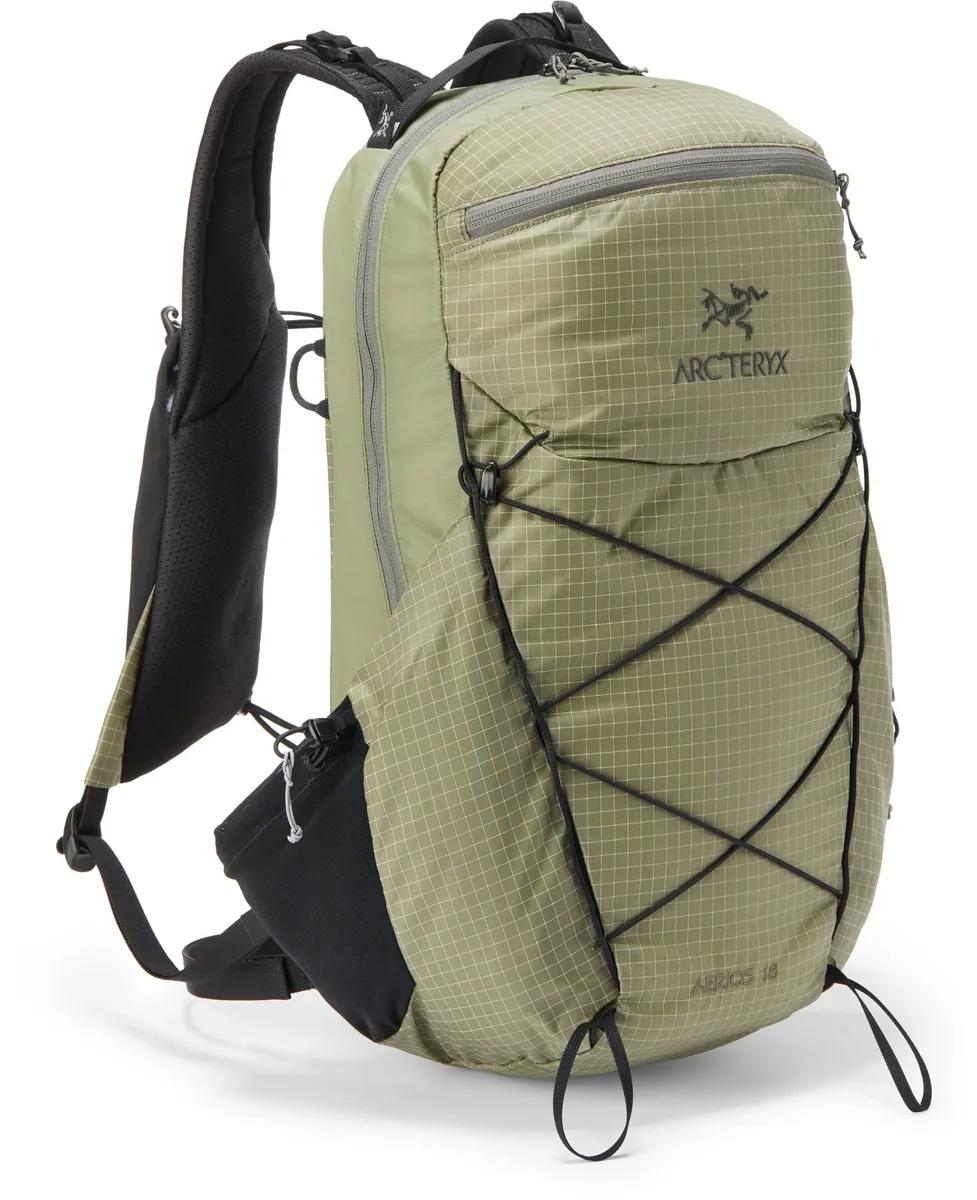
Arc'teryx Aerios 18
The Aerios 18 uses Arc'teryx's AeroForm thermoformed back panel, which is moulded to hold its shape rather than relying on foam. Combined with Arc'teryx's Hadron grid fabric, a nylon woven with liquid-crystal polymer fibre, it is the most technically constructed small pack on this site.
Weight
1.25 lbs
Capacity
18 L
Frame
Internal Frame
Arc'teryx
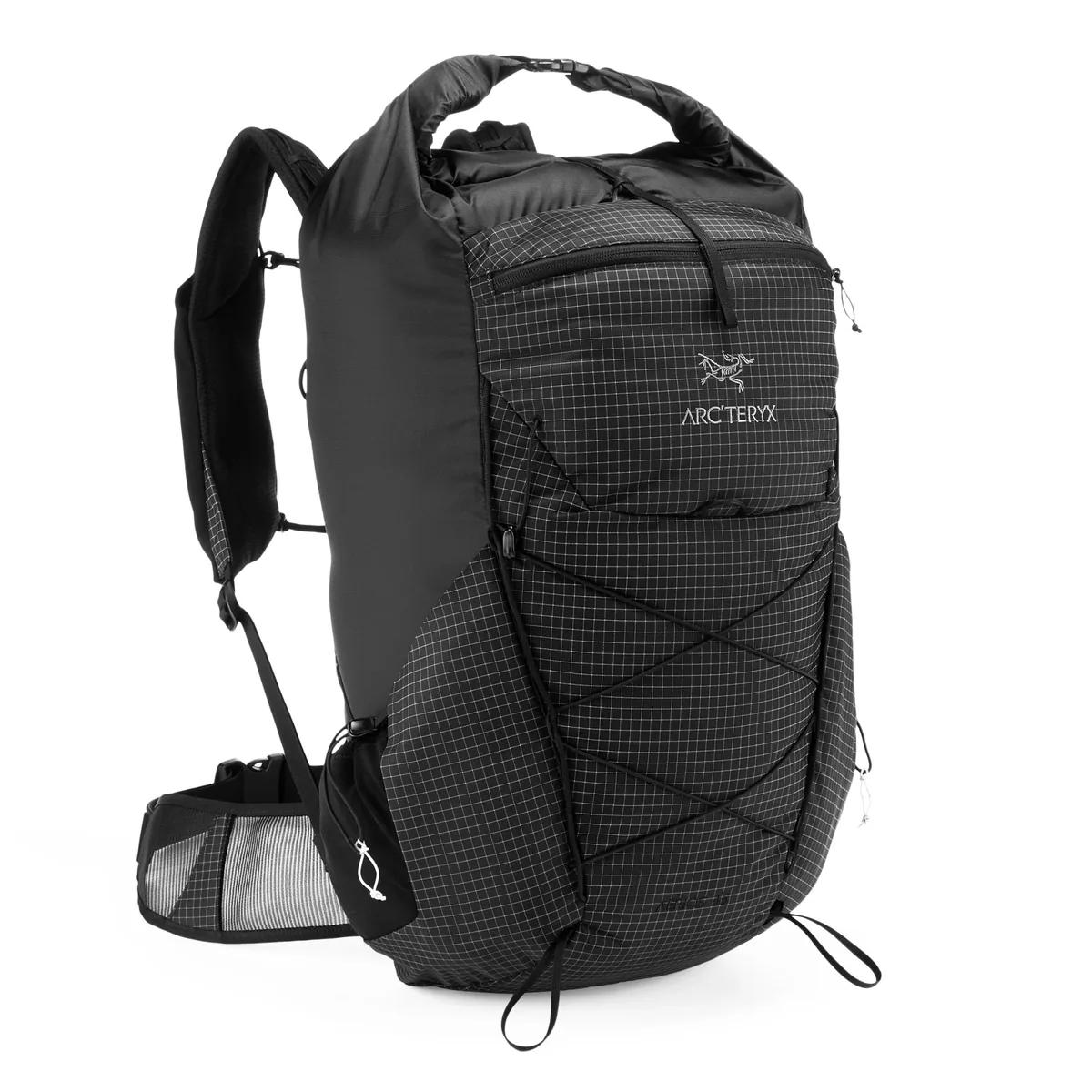
Arc'teryx Aerios 35
Now that the Bora and the Aerios 30 and 45 are gone, the Aerios 35 is the only Arc'teryx pack above 18 L still sold for hiking. It is a roll-top at 2 lb 8.9 oz in the regular size, built on an anti-barreling frame sheet with a removable 7000-series aluminum stay, and the roll-top adds up to 10 L over the nominal volume. Arc'teryx sells it in three torso lengths with interchangeable harnesses and hipbelts.
Weight
2.56 lbs
Capacity
36 L
Frame
Internal Frame

Arc'teryx
Arc'teryx Bora 65
The Bora 65 is Arc'teryx's premium trekking pack, built around the RotoGlide hipbelt that slides up-down and rotates with your gait, plus a weatherproof grid fabric that borders on bombproof. It's the money-is-no-object pick of the traditional hauler class.
Weight
5.0 lbs
Capacity
65 L
Frame
Internal Frame
Arc'teryx backpacks: common questions
Is the Bora 65 still made?▾
It no longer appears on Arc'teryx's US store, which now lists the Aerios 35 as its largest hiking pack. Remaining Bora stock is likely at retailers or secondhand, so check availability before planning around one.
Does the Aerios 35 come in different sizes?▾
Yes. Arc'teryx sells it in Short, Regular and Tall torso lengths, with interchangeable shoulder harness and hipbelt options, so it fits a wider range of bodies than most daypacks.