Pa'lante Packs Backpacks
Pa'lante Packs has 4 backpacks on PackRanker, priced from $240 to $240. Compare the full lineup below.
The name is Spanish shorthand for "onward". Pa'lante started in 2016 with a couple of small batches, about 100 simple packs sewn in a basement in Utah. Andrew Bentz still designs and prototypes every pack in Salt Lake City while Andy Gohlich runs operations from Bishop, California. Production has moved several times: an Arizona factory from 2017 to early 2020, a small team in Ogden, Utah through 2021, and since then mostly a factory in Vietnam, with occasional small batches still made in Ogden. The company says outsourcing lets its two people spend their time designing and testing instead of running a sewing shop.
Every Pa'lante pack is frameless and every one starts at $240, so the choice comes down to volume, harness and fabric rather than price. The V2 is the original hiking pack, 37 L at 18.6 oz with a reachable bottom pocket in place of a lid. The Desert Pack is the higher-volume version for long water carries, 37 L in the 17 in torso or 43 L in the 19 in. The Alpine Pack trades a little volume (33 L) for coated gridstop and a foam back pad aimed at scrambling, and the 24 L Joey is the small one, built around running-vest straps with no hipbelt. Upgrades cost extra: Ultraweave versions of the Desert Pack and Joey run $300, and the Desert Pack with Joey straps is $270.
The V2's comfortable ceiling, by owners' account, is at about 20 lb, with experienced users stretching to 25 lb when the pack is loaded carefully. Anyone who needs a bear canister should look at a framed pack of 50 L or more. Independent testing lines up: one long-term reviewer had more than 2,000 miles on a V2 with no tears or obvious wear.
Pa'lante replaces packs with manufacturing defects bought within the past two years, usually by sending a replacement, but Pa'lante does not do repairs and points owners to DIY fixes or gear-repair shops. Fit is the thing to get right first. Pa'lante measures torso length along the back panel and treats its 16-17 in packs as small/medium and its 19 in packs as medium/large, suggesting the 19 in for most people around 5 ft 9 in and taller.
Sources: palantepacks.com, palantepacks.com, palantepacks.com, treelinereview.com
Every Pa'lante Packs pack
Pa'lante Packs
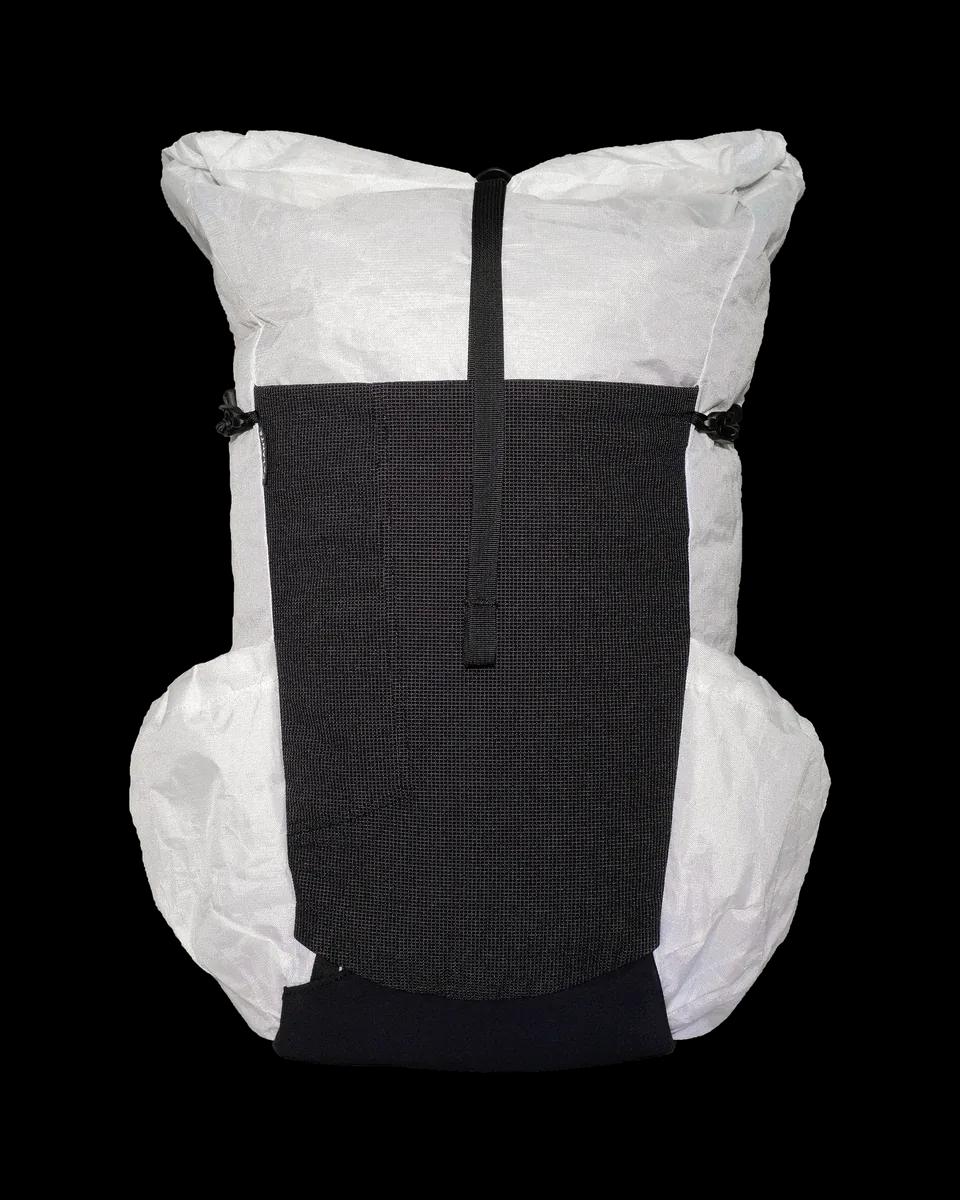
Pa'lante Packs V2
At 18.6 oz the Pa'lante V2 is the clearest expression of the frameless ultralight philosophy: no frame, no stays, no lid, and a bottom pocket instead of a brain. It only works for hikers whose base weight is low enough that a frame is genuinely unnecessary.
Weight
1.16 lbs
Capacity
37 L
Frame
Frameless
Also in 32 L
Pa'lante Packs
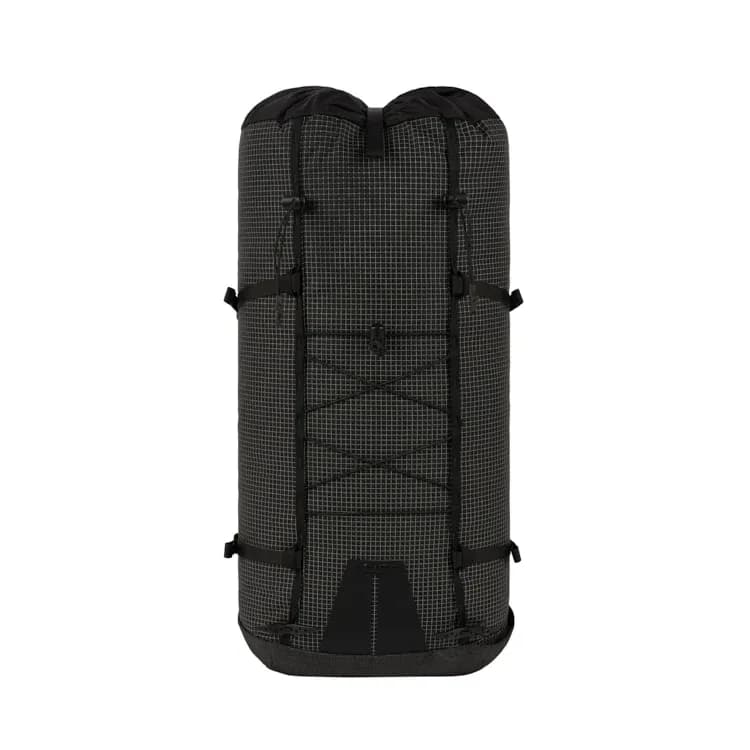
Pa'lante Packs Alpine Pack
Coated UHMWPE gridstop and a 1.2 oz foam back pad make up Pa'lante's Alpine Pack, a 33 L frameless pack. It weighs 20.1 oz with straps or 17.3 oz without, and comes in one 18 in torso length.
Weight
1.26 lbs
Capacity
33 L
Frame
Frameless
Pa'lante Packs
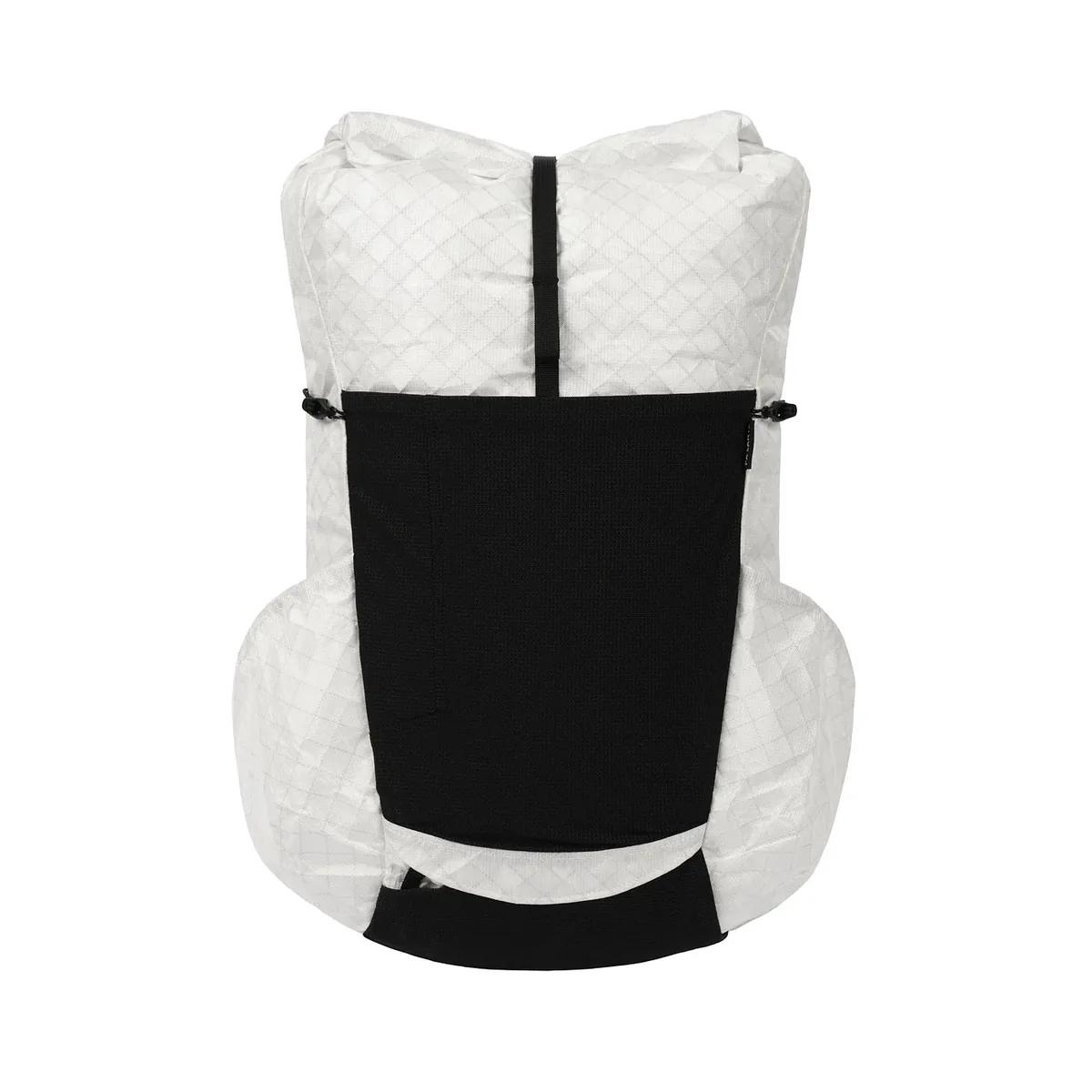
Pa'lante Packs Desert Pack
Sized for long water carries, the Desert Pack is Pa'lante's higher-volume frameless pack: 37 L in the 17 in torso and 43 L in the 19 in. The brown UHMWPE gridstop version weighs 18.2-18.8 oz; a white Ultraweave 400X build costs $300. It uses a webbing belt, and a $270 variant swaps in the Joey's vest straps.
Weight
1.14 lbs
Capacity
37 L
Frame
Frameless
Also in 43 L
Pa'lante Packs
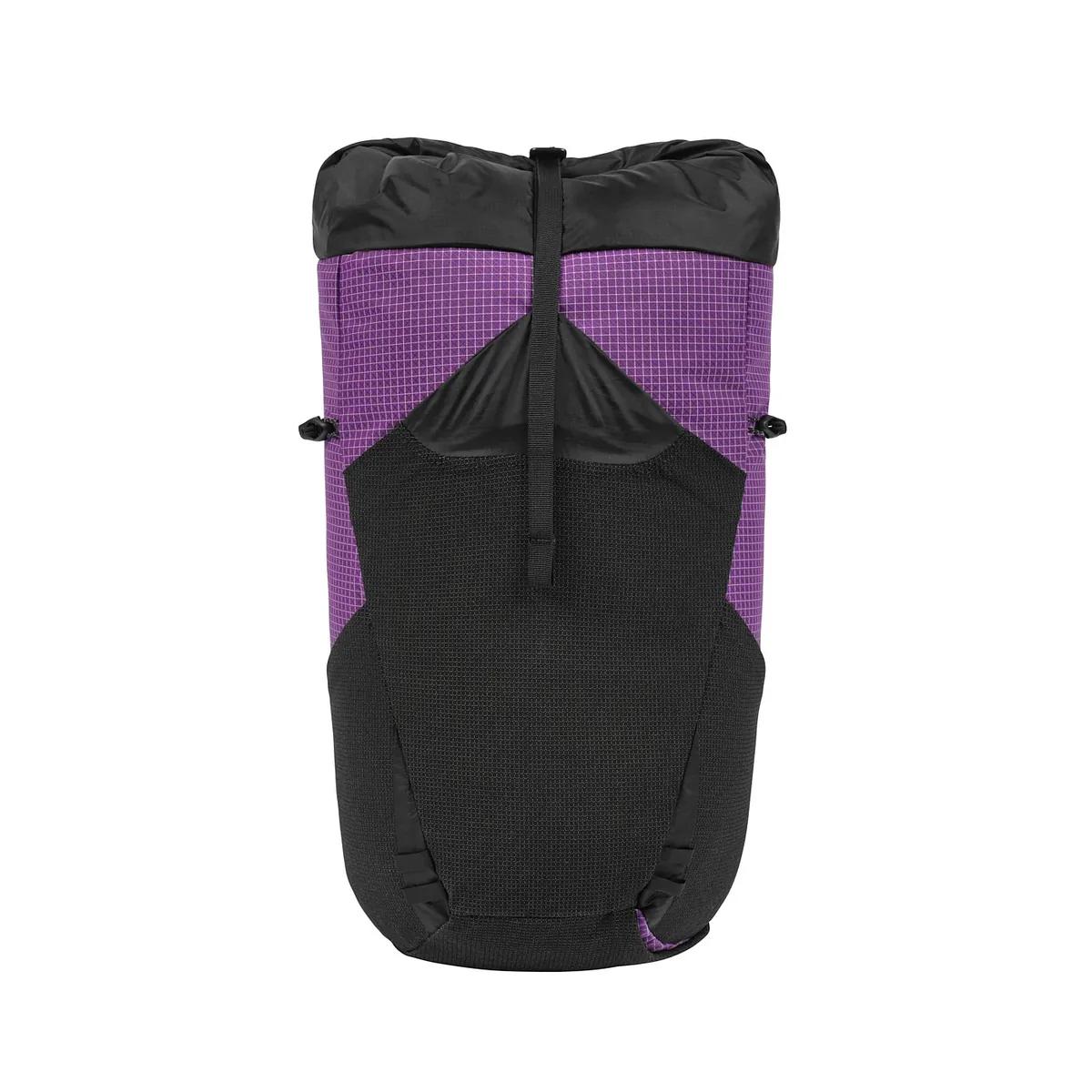
Pa'lante Packs Joey
Running-vest shoulder straps go on the Joey, Pa'lante's small frameless pack holding 24 L in the main body. The purple UHMWPE gridstop version weighs 14.1 oz with standard straps; a black Ultraweave 200X build costs $300. There is no hipbelt and no back pad unless you buy the $330 pad-and-sleeve variant.
Weight
0.88 lbs
Capacity
24 L
Frame
Frameless
Pa'lante Packs backpacks: common questions
Which Pa'lante pack should a first-time frameless user start with?▾
The V2 is the usual starting point: 37 L, 18.6 oz, and the shape most of the line grew from. Choose the Desert Pack instead if long water carries mean you need the 43 L size in the 19 in torso.
Where are Pa'lante packs made?▾
Design and prototyping happen in Salt Lake City, Utah. Since 2021 most packs have been made in Vietnam, with some small batches still sewn by a team in Ogden, Utah.