Hyperlite Mountain Gear Windrider 55 vs Hyperlite Mountain Gear Junction 55
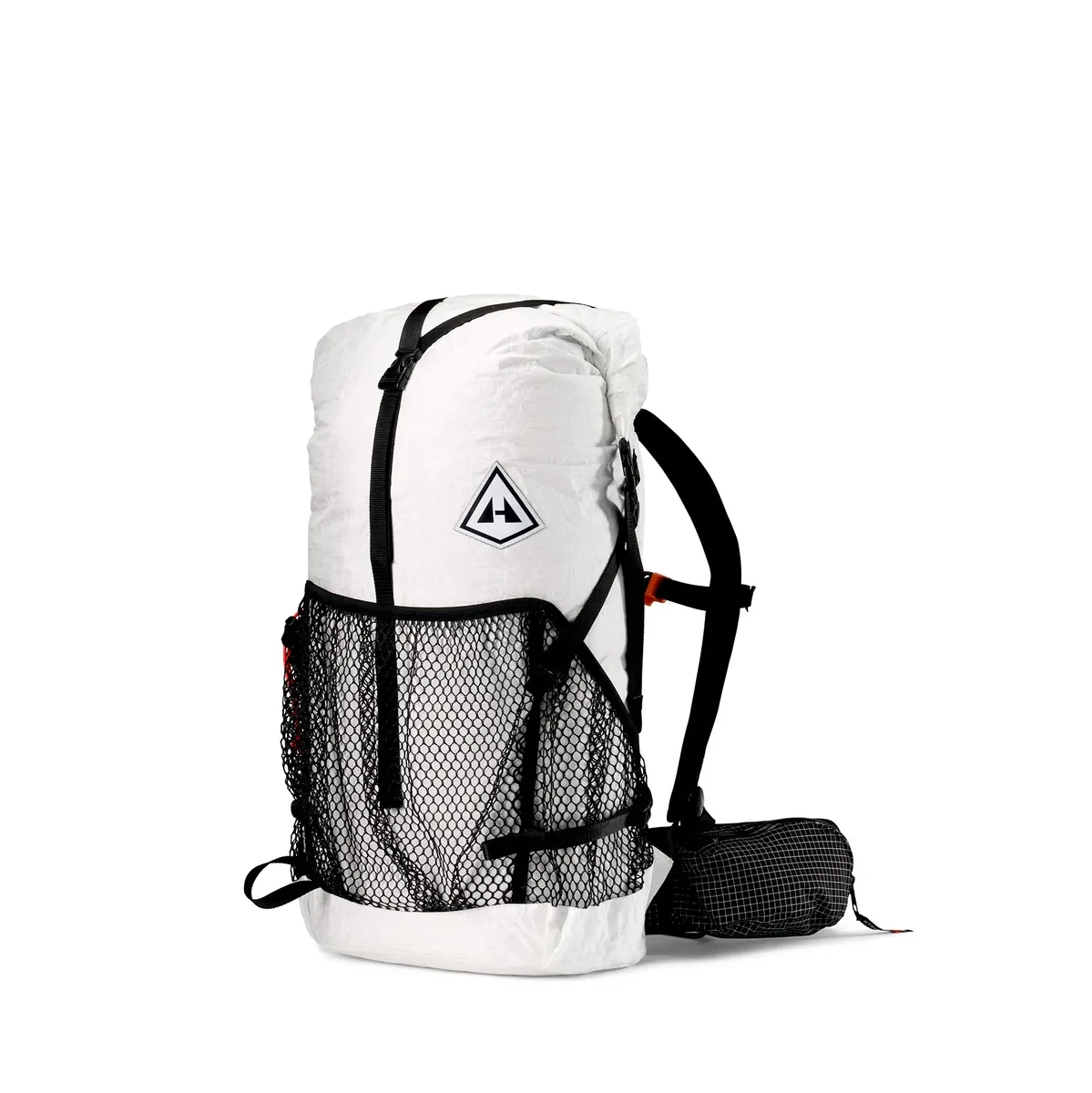
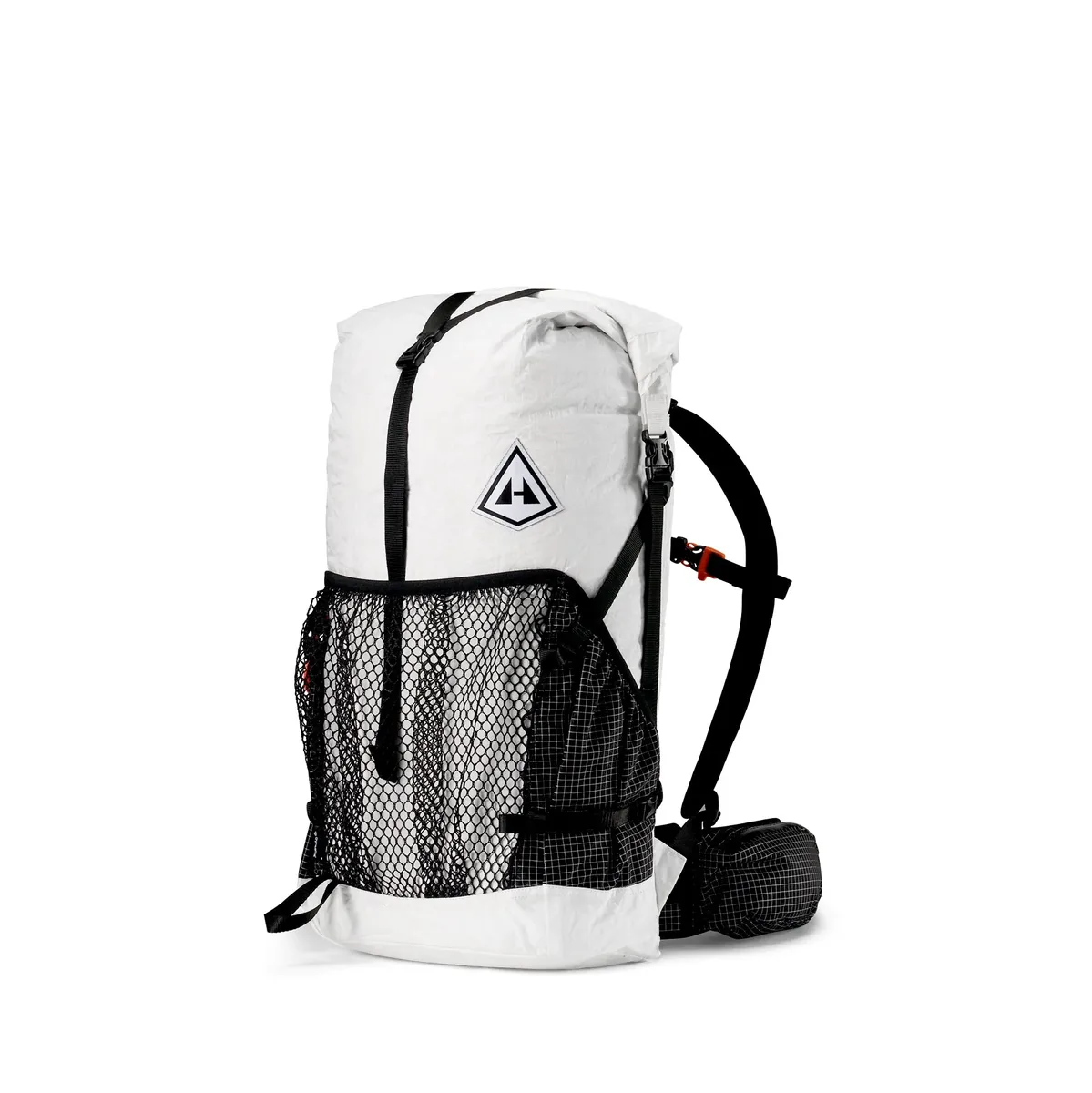
Quick take: The Hyperlite Mountain Gear Windrider 55 suits thru-hikers who want external stowage that drains; the Hyperlite Mountain Gear Junction 55 suits hikers who want a compromise between drainage and abrasion resistance.
Which one to buy
The Junction exists for anyone stuck between a Windrider and a Southwest. Against the Windrider alone, the choice is smaller still: same $420, same 55 L roll-top on removable aluminum stays and a foam pad, same fixed S-Tall torso sizes, and 0.03 lb between them. The front pocket is the only real difference. The Windrider's is all mesh; the Junction's is part solid Dyneema, part mesh.
Windrider owners make a strong case for full mesh. They report months on the PCT and general bushwhacking without failures, because the mesh is sewn with extra material rather than stretched tight, and one hiker dried clothes in it on the move. Snagging on rock scrambles is the real risk. The Junction's hybrid is a compromise that fully satisfies neither camp: it drains less than full mesh and protects less than solid fabric.
On both, the taped-seam body keeps gear dry in sustained rain with the roll-top closed, and owners put the comfortable ceiling somewhere around 35-40 lb. Both got the 2025 fabric change and wider shoulder straps, and both share this family's downsides: Dyneema that creases and wears at fold lines, field repairs that are hard, and fixed torso sizes you order carefully off the chart. The Windrider also comes in a 70 L size for canister country and winter bulk, which the Junction does not. Given how well owners say the Windrider's mesh holds up, the Junction's partial armor buys little, and the Windrider is the better default.
Hyperlite Mountain Gear Windrider 55
The default for most thru-hikers: a full mesh pocket that owners say survives long trails, plus a 70 L option if you need it later.
Hyperlite Mountain Gear Junction 55
Only if scrambles or scrubby off-trail sections are a regular part of your hiking and you still want some drainage up front.
| Spec | Hyperlite Mountain Gear Windrider 55 | Hyperlite Mountain Gear Junction 55 |
|---|---|---|
| Price | $420 | $420 |
| Rating | — | — |
| Type | Ultralight Pack | Ultralight Pack |
| Frame Type | Internal Frame | Internal Frame |
| Capacity | 55 L | 55 L |
| Weight | 1.94 lbs | 1.91 lbs |
| Max Load | Up to 40 lbs | Up to 40 lbs |
| Torso Fit | Sized S/M/L/Tall: S 15-17 in, M 17-19, L 19-21, Tall 21+ in | Sized S/M/L/Tall: S 15-17 in, M 17-19, L 19-21, Tall 21+ in |
| Material | Dyneema Woven Composite 3.9, Large Hole Mesh | Dyneema Woven Composite 3.9, Hardline, Large Hole Mesh |
| Back Panel | Removable aluminium stays with foam pad | Removable aluminium stays with foam pad |
| Adjustable torso | No | No |
| Ventilated back | No | No |
| Raincover included | No | No |
| Hipbelt pockets | Yes | Yes |
| Removable lid | No | No |
| Hydration sleeve | Yes | Yes |
| Fits BV500 bear can | Yes | Yes |
| Warranty | Guaranteed against manufacturing defects, no term stated | Guaranteed against manufacturing defects, no term stated |
Pros & cons
Hyperlite Mountain Gear Windrider 55
- ✓The mesh front pocket drains and dries, which solid-fabric packs cannot do.
- ✓31.1 oz for a framed waterproof 55 L pack is excellent.
- ✓The 2025 Dyneema Woven Composite update is up to ten times more abrasion resistant than the previous fabric.
- ✓Widened shoulder straps in the 2025 revision address a long-standing complaint.
- ✓Three volumes from 40 to 70 L on the same design.
- ✓Removable aluminium stays allow stripping the pack down further.
- ✓Hyperlite's build quality and seam taping set the benchmark in this segment.
- ✓Strong resale value offsets the high entry price.
- ✗$420 for the 55 L is expensive ($395 for the 40 L, $450 for the 70 L).
- ✗The mesh front pocket is the first thing to fail on this style of pack.
- ✗No adjustable torso.
- ✗Dyneema creases and wears at fold lines over time.
- ✗Field repair is difficult and expensive compared with woven nylon.
- ✗Warranty terms are less generous than the mainstream brands'.
Hyperlite Mountain Gear Junction 55
- ✓The hybrid front pocket is more abrasion resistant than the Windrider's full mesh while still draining.
- ✓30.6 oz for a framed waterproof 55 L pack, half an ounce under the Windrider 55.
- ✓The 2025 Dyneema Woven Composite update substantially improves abrasion resistance.
- ✓Widened shoulder straps in the 2025 revision.
- ✓Removable stays allow stripping down for lighter trips.
- ✓55 L handles a bear canister and a long food carry.
- ✓Hyperlite's construction quality is the benchmark for DCF packs.
- ✓Strong resale value.
- ✗$420 matches the Windrider 55 with no price advantage for the compromise design.
- ✗Only two volumes, 40 and 55 L, against the Windrider's three.
- ✗No adjustable torso.
- ✗The hybrid pocket is a compromise that fully satisfies neither requirement.
- ✗Dyneema wears at fold lines and is hard to repair.
- ✗Warranty terms are less generous than the mainstream brands'.
Hyperlite Mountain Gear Windrider 55 vs Hyperlite Mountain Gear Junction 55: common questions
Is the Junction's solid section worth it over the Windrider's full mesh?▾
For most trail hikers, not really. Windrider owners report months on the PCT and bushwhacking without mesh failures, and the Junction's hybrid is a compromise. It helps mainly if you scramble on rock often, where mesh snags.
Do they carry the same load?▾
Yes. They share removable aluminum stays and a foam pad, and Windrider owners put the comfortable ceiling around 35-40 lb while Junction owners say the mid-to-high 30s, with room in the 55 L body for a bear canister and a long food carry.
Can I get either in a bigger size?▾
Only the Windrider, which also comes in 70 L for canister country and winter bulk. The Junction stops at 55 L, with a 40 L version below it.
Similar backpacks
Bonfus
Bonfus Aerus 55L
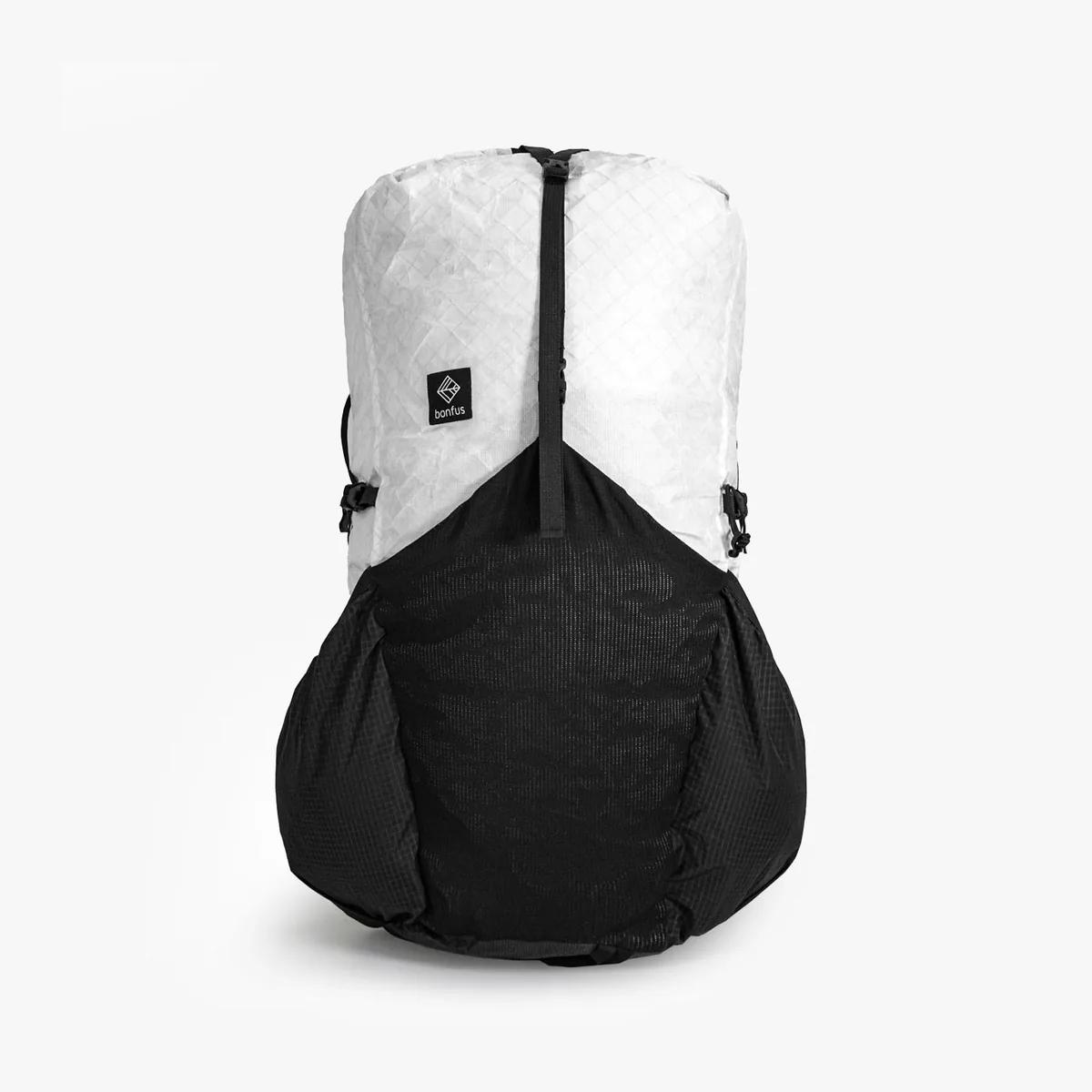
Bonfus gives the Aerus 55L a ventilated back: a tensioned mesh panel stands off a curved 7075 aluminium frame braced with four carbon-fibre cross elements, the trampoline layout normally found on much heavier packs. Total volume is 55 L (47 L internal plus 8 L external) and the medium weighs 795 g in Ultra 200X. It is rated to 33 lb.
Weight
1.75 lbs
Capacity
55 L
Frame
Internal Frame
Hyperlite Mountain Gear
Hyperlite Mountain Gear NorthRim 55
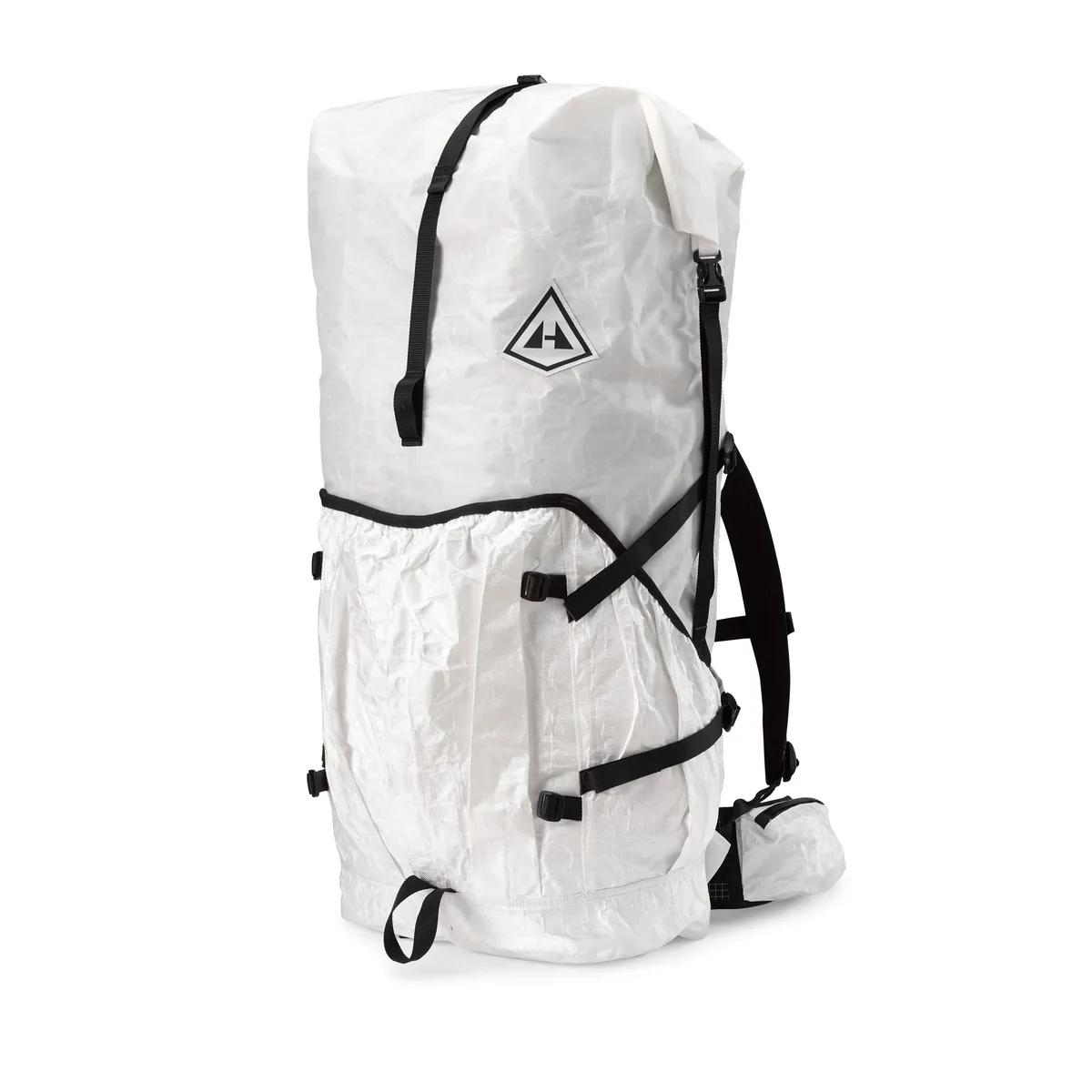
HMG calls the NorthRim its most durable model. It is a roll-top Dyneema pack in 55 and 70 L whose bottom and pockets are woven Dyneema rather than laminate, with 9.8 L of outside pocket volume and both side and over-the-top compression. The 70 L version is rated to 60 lbs.
Weight
2.18 lbs
Capacity
55 L
Frame
Internal Frame
Also in 70 L
Osprey
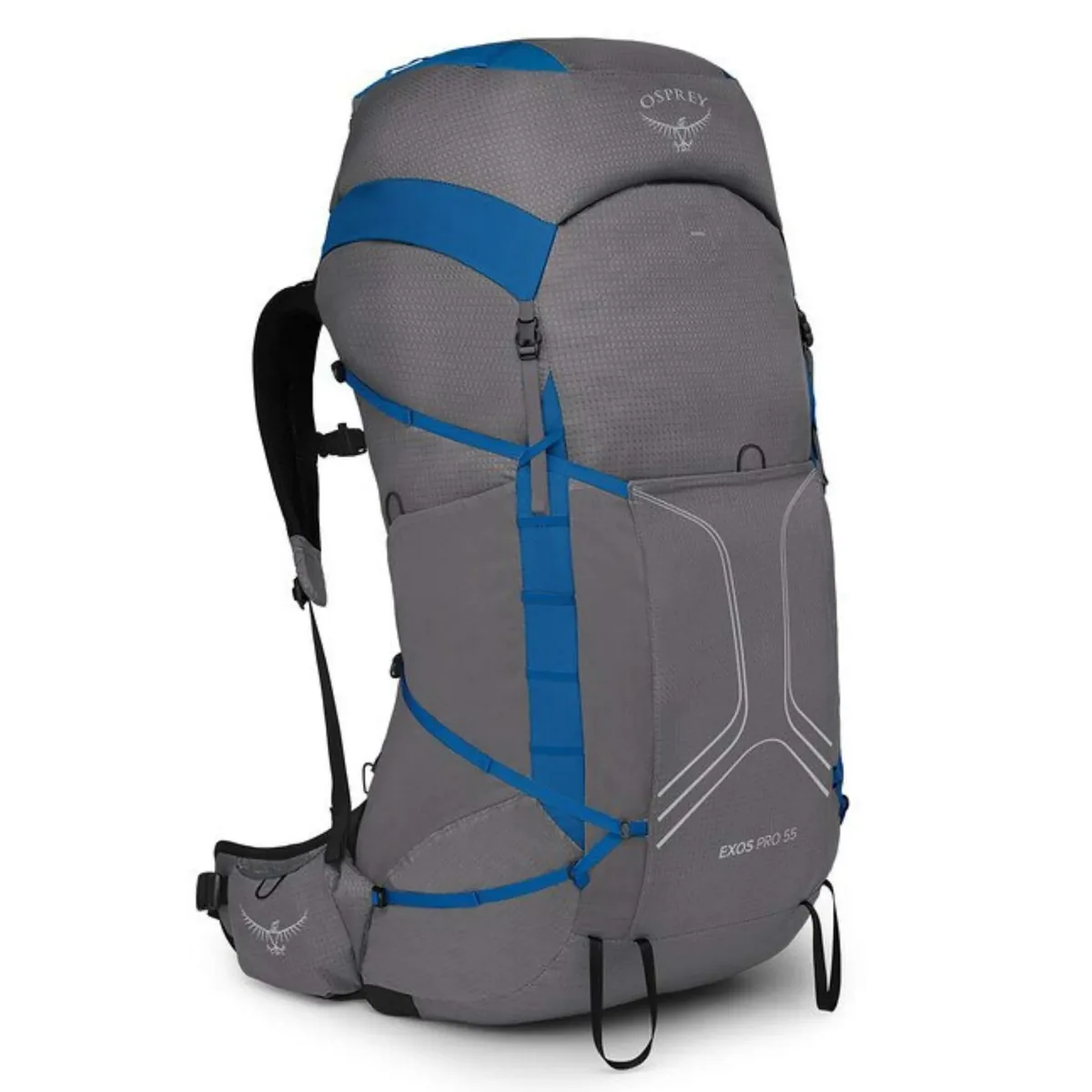
Osprey Exos Pro 55
The Exos Pro is Osprey's answer to the cottage ultralight brands: 33.2 oz for 55 L, or 30.4 oz with the lid removed. It uses NanoFly, a 100D nylon crossed with 200D UHMWPE, over a 3.5 mm LightWire frame, and saves about three-quarters of a pound against the standard Exos 58 at the cost of load rating and a fixed hipbelt.
Weight
2.08 lbs
Capacity
55 L
Frame
Internal Frame