Deuter Aircontact Core 50+10 vs Kelty Trekker 65
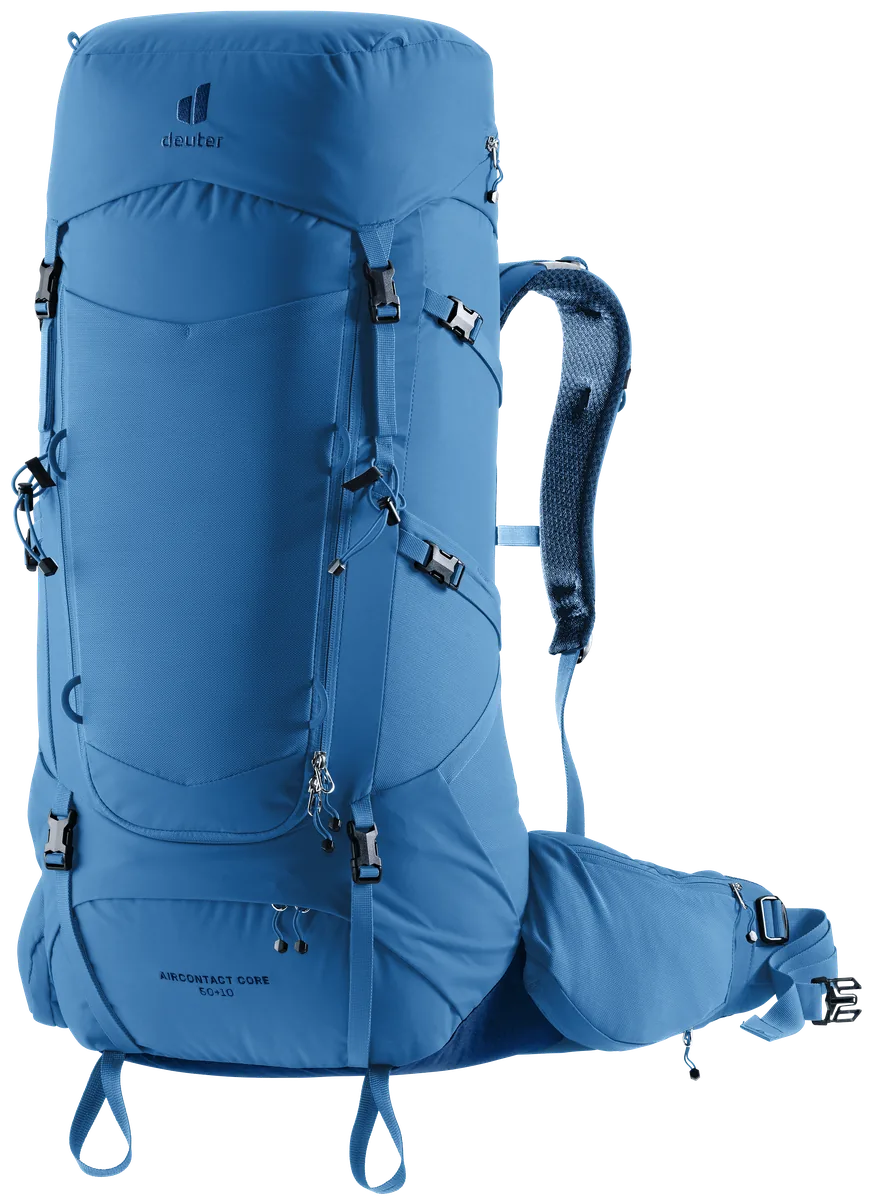
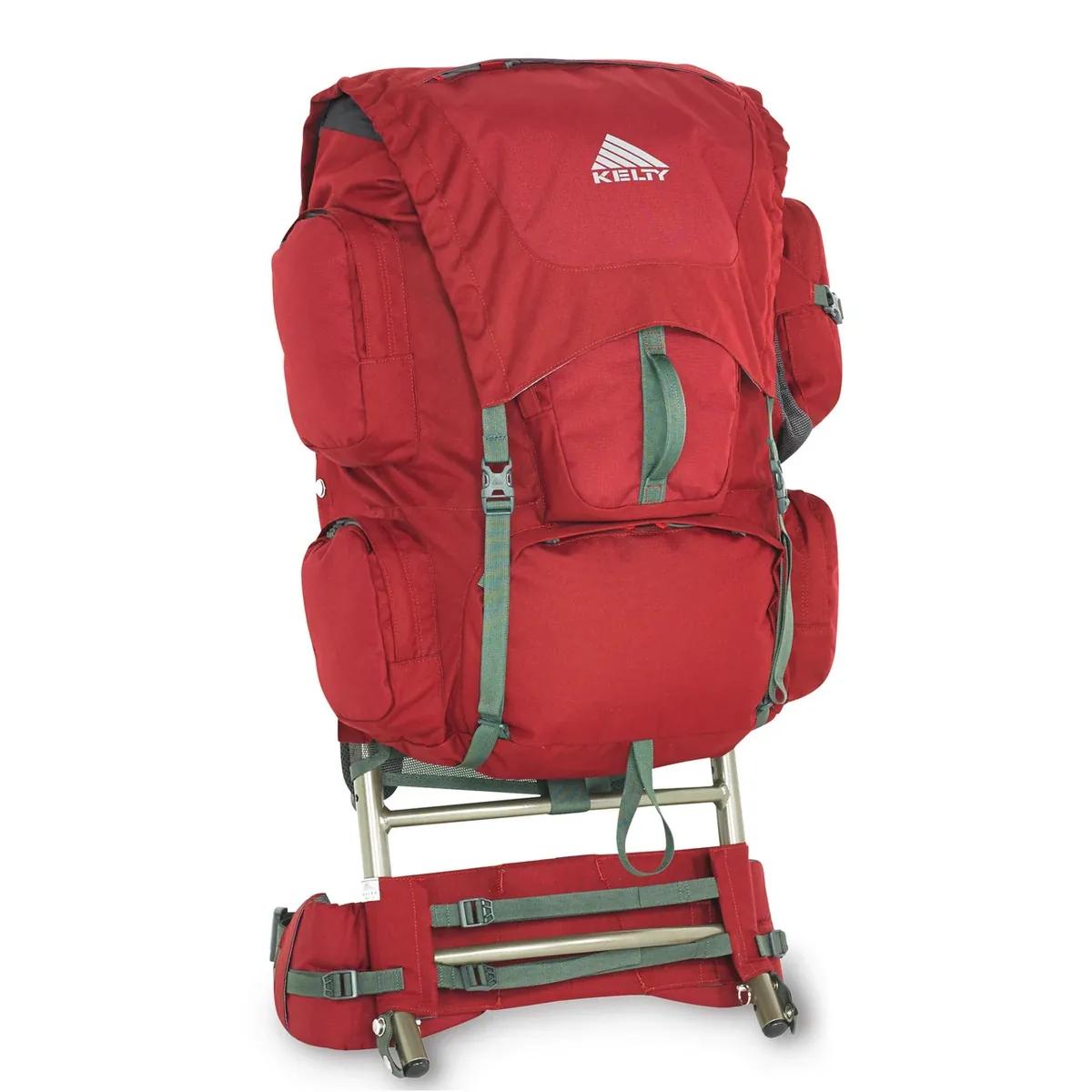
Quick take: The Kelty Trekker 65 carries more (65 vs 60 liters); the Deuter Aircontact Core 50+10 is lighter (5.09 vs 5.31 lbs).
Which one to buy
How much are you hauling, and what shape is it? The Kelty Trekker 65 is one of the last external-frame packs still made, rated for 50-70 lbs with an aluminum frame you can lash bulky gear straight onto. The Deuter Aircontact Core 50+10 is a modern internal-frame trekking pack rated for 22-44 lbs. Both cost $280 and both weigh over five pounds, so neither is the light choice.
If your loads sit under 44 lbs, the Core is the better-designed pack. Owners say its rating holds up because the Y-frame and pivoting VariFlex hip fins move weight to the hips, and VariClick's five stops don't creep under load. It opens through a U-shaped front zip, has a wet compartment, a removable lid and a hip-fin bottle holster. The Trekker is a plain top-loader with a spindrift collar and no hipbelt pockets.
The Trekker's reason to exist is the top end. Trail crews, scouts carrying group gear and anyone moving awkward, heavy loads will use a 70 lb ceiling and a frame that carries things outside the bag. Its 16-22 in torso range starts a touch shorter than the Core's 16.5 in, though the Core reaches further, to 24.5 in. The cost is a rigid frame that is awkward in cars and on airlines, which is true of the Core's Y-frame too. A rain cover is an add-on for both.
Deuter Aircontact Core 50+10
For backpackers and hut trekkers whose loads stay under 44 lbs and who want front access, a wet compartment and a fit that reaches very tall torsos.
Kelty Trekker 65
Only if you regularly carry 50 lbs or more, or need to lash bulky gear to the frame, as on trail crews or group trips.
| Spec | Deuter Aircontact Core 50+10 | Kelty Trekker 65 |
|---|---|---|
| Price | $280 | $280 |
| Rating | — | — |
| Type | Traditional Pack | Traditional Pack |
| Frame Type | Internal Frame | External Frame |
| Capacity | 50+10 L | 65 L |
| Weight | 5.09 lbs | 5.31 lbs |
| Max Load | 22-44 lbs (10-20 kg) | 50-70 lbs |
| Torso Fit | VariClick 5-stage, 42-62 cm (16.5-24.5 in) | 16-22 in (41-56 cm); adjustment method not stated |
| Material | 500D PA textured with 235D recycled PA plain weave | 600D polyester with 600D small ripstop |
| Back Panel | Aircontact with Air Spacer mesh and aluminium Y-frame | Aluminium external frame; back panel construction not published |
| Adjustable torso | Yes | Yes |
| Ventilated back | Yes | No |
| Raincover included | No | No |
| Hipbelt pockets | No | No |
| Removable lid | Yes | No |
| Hydration sleeve | Yes | Yes |
| Fits BV500 bear can | No | No |
| Warranty | Deuter lifetime repair policy | Kelty lifetime warranty against manufacturing defects |
Pros & cons
Deuter Aircontact Core 50+10
- ✓The external aluminium Y-frame transfers heavy loads to the hips as well as anything in the price class, and the 10-20 kg rating is genuinely usable rather than optimistic.
- ✓VariClick gives 42-62 cm of back length in five positive stops, so the fit is repeatable rather than a friction slider that creeps under load.
- ✓A U-shaped front zipper opens the main compartment like a suitcase, which avoids the top-loader problem of unpacking everything to reach the bottom.
- ✓The separate bottom compartment and dedicated wet compartment keep a damp tent or muddy layers away from a dry sleeping bag.
- ✓VariFlex hip fins pivot with the stride instead of staying fixed to the frame, which reduces the rocking that shows up on uneven ground.
- ✓The zip-out 1.5 L bottle holster on the hip fin means water is reachable without stopping or removing the pack.
- ✓The detachable, height-adjustable lid lets the pack shrink for a shorter trip rather than carrying dead volume.
- ✓Deuter's lifetime repair policy covers wear and manufacturing faults on a pack that costs meaningfully less than an Aether 65 or Baltoro 65.
- ✗At 2,310 g (5.09 lb) it is over a pound heavier than a Gregory Focal 58 or Osprey Exos 58 of comparable volume.
- ✗The foam-rib Aircontact back sits closer to the spine than a suspended-mesh panel, so it ventilates less well than Deuter's own Futura Air Trek in hot weather.
- ✗The stated 50 L is only reached with the +10 collar extended; packed to the lid it is closer to a true 50 than the badge suggests.
- ✗No rain cover is included at this price, unlike the Aircontact Pro and the Futura Air Trek.
- ✗The external Y-frame adds bulk that makes the pack awkward as carry-on or in a crowded hut.
- ✗Deuter's US size run is narrower than Osprey's: two men's volumes against the Aether's four.
- ✗The 500D face fabric is durable but heavy, and it is the main reason the pack cannot compete on weight.
- ✗Bear-canister fit is not stated by Deuter, so it should not be assumed for trips that require one.
Kelty Trekker 65
- ✓A 70 lb upper carry rating, more than any internal-frame trekking pack in Kelty's range except the Asher 85.
- ✓External frame allows lashing bulky loads directly to the frame outside the bag.
- ✓Torso range of 16-22 in reaches taller hikers that most packs stop short of.
- ✓Reservoir sleeve for hydration.
- ✓Kelty's lifetime defect warranty applies.
- ✗5.31 lb empty, two full pounds over the Nena 60 at nearly the same volume.
- ✗Rain cover is explicitly not included.
- ✗No hipbelt pockets are listed.
- ✗The rigid frame is awkward in vehicles and on airlines.
- ✗$280 is Glendale money for a design most makers have abandoned.
Deuter Aircontact Core 50+10 vs Kelty Trekker 65: common questions
Is an external frame like the Trekker 65 still worth buying?▾
For heavy, awkward loads, yes: its 50-70 lb rating and lash-anywhere frame do things the Aircontact Core cannot. For ordinary backpacking under 44 lbs the Core is the more refined carry, with front-zip access and pivoting hip fins.
Which fits a tall hiker?▾
Both reach tall torsos. The Trekker covers 16-22 in, though Kelty does not say how it adjusts. The Core goes to 24.5 in in five positive stops, which makes it one of the few mainstream packs that fits very tall torsos.
Can I fly with either?▾
Both are check-in packs. The Core's external Y-frame is awkward in overhead bins, and the Trekker's rigid aluminum frame is just as awkward in vehicles and on airlines.